Blog

  • Easy Strategies to Attract More Tourists Through Trade Marketing

    Easy Strategies to Attract More Tourists Through Trade Marketing

    The UAE is a country known for its bustling tourism sector and leveraging trade marketing for tourism can be a real game changer.

    With an increasing population, unstable customer preference, and advancement of technology, tourism marketing strategies are essential for brands in the UAE to engage with their target market and ensure sustainable growth.

    This article exposes brands to innovative and sustainable ways to attract tourists through B2B marketing strategies.

    ❖     Partnership and Collaboration

    Collaborating with other local brands, hotels, and travel agencies is an effective way to attract more tourists through trade marketing in the UAE. As a country big on culture, this collaboration will mix business acumen with cultural richness leading to increased fortune. It will appeal greatly to international tourists as this will give them the chance to mix with the roots of the country. 

    For instance, you could offer travel agents exclusive deals and in return, they generate tourist leads for you. The Dubai Expo 2020 is evident in how effective this can be. Collaborating with over 192 countries and thousands of local businesses, the country’s revenue from tourism increased by 15% over six months after over 24 million people visited the country.

    Local partnerships not only place your business on a high pedestal, it also stimulate economic growth and make the country people’s one-stop global destination.

    One way to ensure these partnerships work is by hosting a familiarization trip (FAM) where you invite key stakeholders like travel agents, influencers, hotels, etc., and show them an immersive experience of your destination.

    Showing them what you offer will increase their chances of promoting your brand. Over time, organizing FAM trips has seen to yield high.

    • B2B Platforms

    There is a cloud of digital shift hovering over the tourism industry in the UAE. According to Travelperk, over 70% of tourists book their tickets online. Statista also revealed that as of 2023, the virtual travel market size globally sits at 600 billion dollars.

    Using digital B2B platforms boosts tourism trade marketing by leading local businesses with global travel agencies. These platforms make it easy to arrange logistics, sort accommodation, and also conclude major tasks before the arrival of tourists or visitors.

    As a business, you can also incorporate B2B tourism marketing resource tools like online trade marketplaces with the big players in the game. Expedia Partner Central is one of the platforms that allow businesses to reach a wide range of their target market.

    B2B tourism marketing is crucial because it aids market penetration.

    B2B tourism marketing is crucial because it aids market penetration
    • Adopt and Implement Tourism Market Trends

    Another strategy to attract more tourists is to understand the market preferences of these tourists and lock in on well-bred trends to nurture it. Some of the key trends to jump on include growth in luxury travel, rise in digital booking, sustainable tourism, mobile engagement and personalized services, and the increased demand for eco-tourism adventures.

    • Leverage Data-Driven Marketing Campaigns

    Harnessing the power of data in today’s age is essential to understand tourists’ behaviour. Adopting data-driven strategies and models will increase your brand’s trade marketing for tourism. It will direct you to channel all your marketing strategies effectively.

    Tools like Customer Relationship Management (CRM) can aid in collecting visitors’ data like feedback, booking habits, choice of vacation, family size, etc. These insights help to create a specific campaign that appeals to your target market.

    For instance, UAE tourism market trends revealed that in 2024, the tourism sector recorded an ever-high 9.31 million international overnight visitors in the first half of 2024. A wide margin compared to 2023’s 8.5 million visitors.

    Additionally, effective use of data for trade marketing solutions for UAE tourism can help to segment audiences. Your brand can customize its offerings to resonate with family needs, leading to a higher conversion rate. This level of precision in B2B Tourism Marketing further fosters better collaborations with other business partners.

    • Utilize Influencers and Affiliate Marketing

    Affiliate marketing involves dealing with websites, travel blogs, and vlogs like TripAdvisor by offering incentives to encourage these outfits to promote your destination.

    This is less costly and yields.

    On the other side of the coin, influencer marketing is currently a leading tool in trade marketing for tourism but a lot of companies are yet to take advantage of this hack. Utilizing influencers’ large social media presence can boost your brand’s visibility.

    While it could be costly, this strategy is a sure banker to attract more tourists through trade marketing. During the launch of the Dubai Desert Safari and Burj Khalifa, influencers played a huge role in attracting visitors to both places with their large followers.

    However, not all marketing executives key into this idea. In March 2023, some marketing executives in the UAE were surveyed about their thoughts on influencer marketing being of immense benefit to tourism in the country.

    influencer marketing

    Frequently Asked Questions on Tourism Marketing Strategies

    How do I start trade marketing for my tourism business?

    The first step is to identify prospects you can partner with. The market is wide and you cannot do it all alone. Then you can have personalized packages and attend industry trade shows to network and make an announcement.

    How can small tourism businesses compete in the UAE market?

    By streamlining their reach to specific segments, partnering with local operators, and being big on the adoption of technological tools, small businesses can make small strides and compete in the UAE market.

    Conclusion

    Attending tourism trade shows, expanding into emerging tourism segments, developing targeted marketing materials, and focusing on digital integration are other ways to attract tourists to your brand.

  • How to Use Survey Results to Improve Your Tobacco Brand?

    How to Use Survey Results to Improve Your Tobacco Brand?

    According to Businesswire, as of 2023, the global market for Tobacco was estimated at over $900 billion and projected to cross $1 trillion by 2030. This is at a Cumulative Annual Growth Rate of 3% within seven years (2023-2030).

    With cigarettes holding the largest share of the tobacco family products with a market volume of over $800 billion in 2024, China is regarded as the country that generates the highest revenue in this product making over US$290 million in 2024 alone

    According to Statista, globally, the tobacco product market is forecasted to turn in about US$965 billion in 2024 at an annual growth rate of 2.56%.

    tobacco product market

    This growth is driven by several categorical factors ranging from personal preferences to the nation’s economic standing. Other general reasons could include strong distribution networks, trading routes, disposable incomes, and so on. The introduction of reduced-risk innovation products like flavoured-infused e-liquids, heated tobacco, nicotine salt, and so on have greatly influenced the market size of tobacco in its natural form.

    As the competition continues to grow, understanding your customers is essential for your continued existence in the market without cessation. Data collected from a tobacco customer survey can help you as a business owner to gather valuable insights into customer behaviour, satisfaction levels, and so on.

    Why a Tobacco Customer Survey is Important?

    Like in every line of business, a customer survey is important for brands to understand needs from their customers’ perspectives and act towards offering it to them. In the tobacco industry, a tobacco customer survey is a tool used to collect data on clients’ behaviour to refine products and marketing strategies to improve customer satisfaction.

    How to Use Survey Results to Improve Your Tobacco Brand?

    Ø  Tailor Product Offerings to Local Preferences

    Diverse demographics and cultural factors are major factors influencing the consumption of tobacco in the UAE. Results from surveys can highlight several preferences for specific types of products, packaging styles, or flavours.

    Tailoring product offerings to local preferences will help brands identify which flavours specific age ranges like. Are there significant preferences based on location? Survey insights can also reveal preferences for sustainable packaging options that promote brand loyalty.

    Ø  Enhancing Customer Experience and Loyalty Programs

    Surveys have the power to uncover areas of improvement that the customers desire. That way service delivery is refined, delivery becomes faster, and in a market where consumers value customization, brand loyalty can be fostered.

    Ø  Benchmark Against Competitors

    Surveys can help you understand your standing compared to your competitors. It can reveal your competitors’ strengths and weaknesses, and evaluate your brand perception in terms of how consumers view your products compared to that of your competitors.

    This survey can also help identify market gaps and discover where your competitors are falling short so you can use that as an entry point.

    For example, if the results of the survey show that your competitors only have two variants of tobacco, you can capitalize on that and create more flavours.

    Ø  Packaging and Product Pricing

    Pricing and packaging are factors that influence customer choice in a product. Surveys can affect price sensitivity to decide an optimal price that is affordable for the customer and also that will benefit the brand. The same goes for packaging preferences.

    If results from a survey indicate that consumers are willing to pay extra for premium packaging, or eco-friendly packaging, then you should consider introducing sustainable options to make your brand stand out.

    Ø  Refine Marketing Strategies

    Another way to use survey results to improve your tobacco brand is by revealing which channels resonate most with your target market. Understanding customer behaviour helps brand tailor their marketing strategies directly to their audience. That way, it is culturally appropriate and more effective.

    It helps determine which customers engage more with the brand on social media, ensures compliance with governing bodies, and so on. For example, if a survey reveals that there is a preference for social media campaigns among younger users, the brand will easily allocate more resources to ensuring digital ads on those platforms.

    How to Use Survey Results to Improve Your Tobacco Brand?

    How to Use Survey Results to Improve Your Tobacco Brand

    Frequently Asked Questions on Tobacco Customer Survey

    What types of questions should be included in a tobacco customer survey?

    Questions about customers’ preferred variants, packaging type/mode, purchase frequency, product satisfaction, etc. should be included in the survey.

    How often should I conduct a tobacco usage trends survey?

    At least, surveys should be conducted annually to enable effective tracking of evolving customer preferences and industry trends.

    How can I use survey results to improve customer retention?

    One of the best ways to use survey results to improve customer retention is by identifying factors that impact loyalty. The insights from the surveys can be used to enhance customer experience and implement strategies that keep customers coming back.

    Conclusion

    Making the most of survey results can transform your tobacco brand’s approach in the UAE. By effectively using the insights you can make data-driven decisions that the local customers can relate to, ensuring sustainable growth and a stronger market presence.

    Other surveys like Tobacco Market Research Surveys, smoking habits surveys, and so on also help brands discover strategic decisions to drive customer satisfaction and retainers.

  • 5 Simple Steps to Analyze Your Fragrance Competitors

    5 Simple Steps to Analyze Your Fragrance Competitors

    The global perfume and fragrance industry is dynamic and rapidly evolving.  As the fragrance industry expands, so also is how competitive it becomes. Hence, as a business owner, you need to have an in-depth understanding of the competition to stay ahead.

    One such way to achieve this is by conducting a competitor analysis for perfume brands in the UAE’s fragrance industry. This competitor analysis will help you know your competitors’ strengths and weaknesses.

    Whether you are a budding business or you have been in the market for a long time, having fragrance industry competitor insights will provide your brand with growth opportunities. In this article, we will take you through five simple steps to help your fragrance brand perform an effective competitor analysis.

    1.   Identify Key Competitors and Their Market Position

    Identifying the key players is the first step to a successful perfume market competitor analysis. It provides you with details of who and whom you are competing against and their economic importance. To start with, you begin by researching businesses that offer the same service as you. Brands that are into your type of luxury cosmetics, the ones that have similar pricing options, marketing strategies, and target audiences as you.

    These brands could be local or international, and have a strong market presence and brand loyalty.

    How to Identify Competitors?

    –       Use online tools to research brands that are often mentioned in the UAE fragrance market.

    –       Check virtual stores like Amazon and Alibaba for the highest-selling fragrance.

    –       Do a customer survey to determine the brands they frequent and why.

    Identifying these competitors and how they stand to influence your position in the market will put you in a better position of the fragrance industry competitor insights you should implement or add to your strategies.

    2. Analyze their Product Offerings and Unique Selling Propositions (USPs)

    After analyzing your competitors, the next thing to do is to examine their unique selling points or propositions as used by the “big boys” in the industry.

    This alone suffices as an integral part of a competitive analysis for perfume brands. Here in the fragrance industry, examining your competitors’ product lines and unique selling propositions.

     Some of the factors to consider when doing this include;

    Ingredients: Are the ingredients natural or artificial? Do they use rare or sustainable ingredients? Do their ingredients target a particular group? e.g., Do they refrain from using certain ingredients because some people are allergic to them, or do they not care about people’s allergies?

    Fragrance Notes: Consider what their major fragrance note is. Is it floral, the oriental fragrances, or woody?

    Client Appeal: Evaluate what makes their product appealing to customers in the market. What makes it stand out? Is it luxury? Or Longevity? Or its affordability.

    Then lastly, look at their designs. Its aesthetics and how it resonates with the market. What is the idea behind their choice of branding and packaging?

    Taking all these factors into consideration will help you understand customer’s fragrance preferences in the UAE, how you can explore the loopholes to your advantage, and how you can pull a large chunk of them into your brand.

    3. Evaluate Marketing and Advertising Strategies

    There is hardly any big brand out there yet to hack digital marketing to boost their sales and engage customers. Fragrance market analysis reports highlight the impact of social media, digital campaigns, referrals, and influencer marketing on brand building.

    You need to observe how your competitors are promoting their products online and how you can leverage that to create effective strategies for your brand’s audience.

    For a start, influencer partnerships, ad campaigns, social media presence, and customer engagement are areas to start with.

    4.  Assess Customer Reviews and Feedback

    No product, no matter how great, fits all choices. Some customers might fall in love with your product today and the next day, they are whoring after another product. This could probably be due to a shift in your service, pricing, or strategies.

    One way to limit the effect of this is through frequent customer feedback. Customer feedback is a powerful tool in the Fragrance Industry Competitor Insights. Reviews reveal how well a product meets the customer’s expectations. Reviews are like lenses to see where your eyes cannot reach. E-commerce websites, social media, forums, and blogs are popular platforms you can explore if you want to see reviews about some of your competitors.

    5. Benchmark Pricing and Sales Channels

    The fifth step is to finally complete a detailed competitive analysis for perfume brands, assess their distribution channels, pricing methods, and innovation stream. In a country like the UAE, where consumers have varying buying power, finding a small tick that could upset the balance between affordability and luxury appeal could be all you need to tap into the wide market and remain at the top of your game.

    Some of the points to evaluate in this step include discounts and promotions, giveaways and freebies, multiple sales channels, knowing competitors’ presence at premium locations, etc. Knowing where and how your competitors sell their products will be instrumental to your brand’s choosing an effective sales strategy to increase viability and accessibility for your target market in the UAE.

    FAQs on Competitor Analysis in the Fragrance Industry

    How often should I conduct a competitor analysis in the fragrance industry?

    While there is no specific duration, an average of every six months suffice for a large business model.

    What tools can help with competitor analysis in the fragrance industry?

    Some of the tools that can help you include SEMrush, Google Trends, and a couple of other social media analytics tools.

    Why is it important to track both local and international competitors in the UAE?

    This is because the UAE fragrance market is globalized; hence, monitoring local and international competitors will expose you to global trends, whilst localizing your brand effectively.

    Last Words

    By following the five steps above, your brand is on its way to gaining insights that will refine your strategy and help you stand out in a competitive market.

  • How to Turn Sales Numbers into a Great Story for Your Brand?

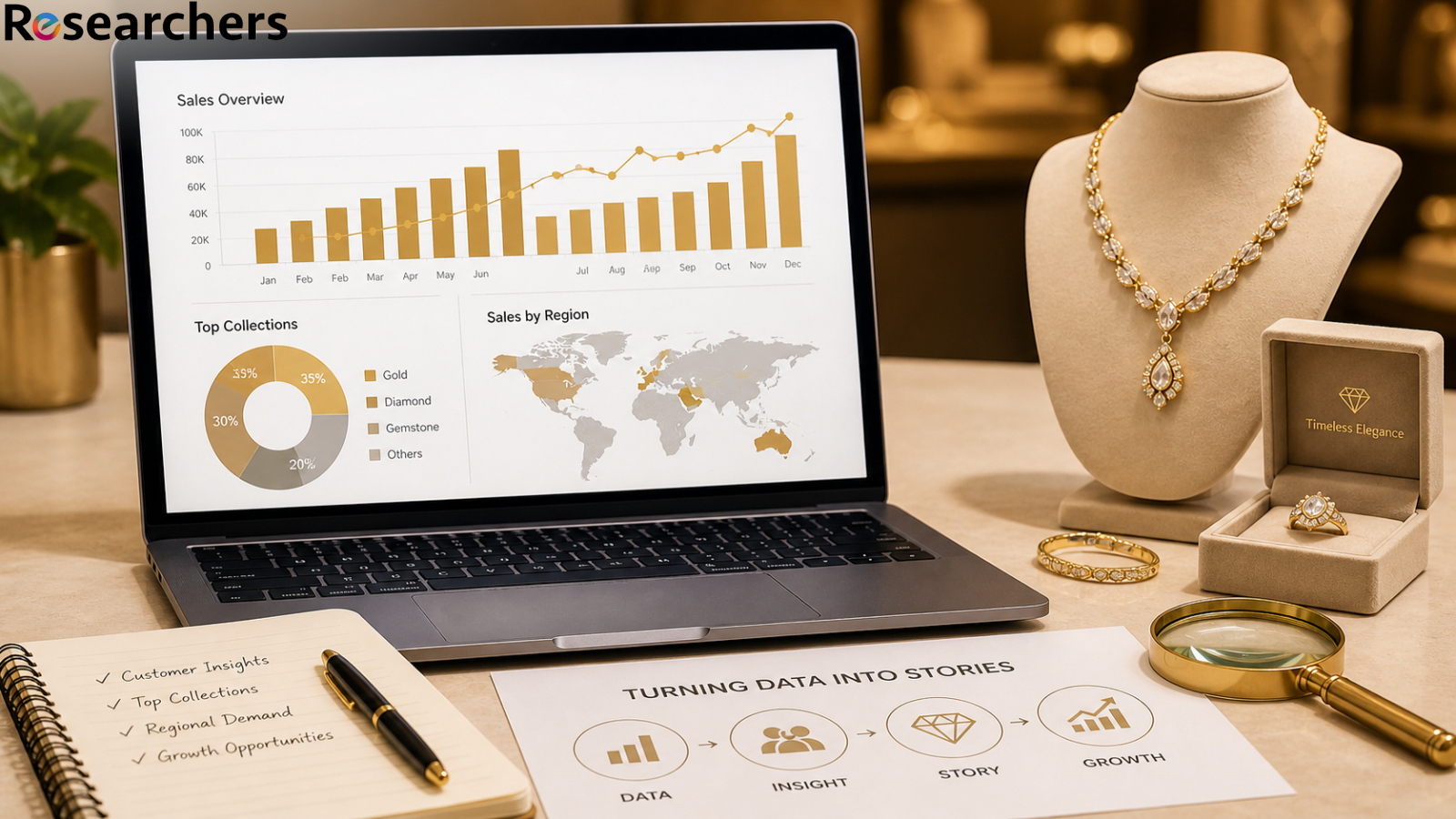
    How to Turn Sales Numbers into a Great Story for Your Brand?

    With a blend of cultural history and modern luxury, the jewellery landscape in the UAE continues to grow and evolve. Daily, the demand for these items increases owing to the increased disposable income of families, the wealth of the nation, its increasing population, the desire for customized pieces of jewellery, and the development of boutique stores and online e-commerce platforms to sell these items.

    The country also hosts international events like the JGT Dubai Jewellery Show, the Dubai International Jewellery Week, etc., which promote the jewellery industry and also attract foreign and local investors to pump money into the sector.

    Globally, the UAE is one of the most recognized countries, significantly contributing to the success and growth of the jewellery industry all over the world. She houses most of the top gold and jewellery markets in the world and also grows the local economy.

    Currently, the jewellery business in the UAE is expected to grow by over 5% in 2025. As of 2023, Market and Data valued the country’s jewellery business at over $5 billion, and is estimated to close in around $8 billion in 2031. This is with a cumulative annual growth rate of 5.3% within those seven years.  

    Considering these statistics and the prospect of this business in the UAE, it is important to leverage data storytelling in the jewellery industry. Raw, real-time figures can reveal much more than profits. It tells a story about how balanced you are in the market, how you are faring, what you should expect in the future, what your customers want, the reason your customers are declining, what you can do to retain them, etc.

    By taking advantage of the storytelling goldmine, jewellery businesses in the UAE can craft compelling narratives that engage customers and elevate their brand’s presence.

    Why Data Storytelling Matters in the Jewellery Industry?

    There is a wide gap between sales data and actionable insights, and data storytelling bridges that gap by using relatable icons or images to simplify technical data concepts. For instance, data analytics for jewellery retailers can reveal patterns like customer preference in a particular region or seasonal demand for certain jewellery products.

    When these patterns are brushed up and translated into narratives, they can help retailers click the link needed to connect/reconnect with their target market on an advanced scale.

    Curating Captivating Stories: Turning Sales to Numbers

    ● The Goal is Important

    Before delving into data storytelling for luxury jewellery brands, start with a clear and defined goal. Define what you want to achieve. Ask yourself questions like;

    –        Am I aiming to achieve customer demographics?

    –        Or optimizing inventory solely based on jewellery trends data analysis?

    Focused goals will make your storytelling vector devoid of irrelevant data. It also ensures that your storytelling aligns with your brand objectives.

    ●  Then Collect and Analyze Relevant Data

    Essential data like sales performance by product category, comparing regional demand of products using data analytics for jewellery retailers, customer feedback and reviews, and so on, can be collected and analysed using tools like Point of Sale systems and Customer Relationship Management (CRM).

    This analysis can reveal insights that the stakeholders can work on to increase traction for the company.

    For instance, the jewellery trends data analysis might reveal insights like: which region orders the most luxury products, which collections customers buy the most, etc.

    ●  Next, you craft a Narrative Around the Data

    Numbers are boring. And you don’t have to inflict that pain on innocent stakeholders, too. While they may appear on your spreadsheet, it doesn’t captivate your audience. The story around the numbers does.

    This can be achieved by highlighting significant milestones in the number. Maybe you reached a significant sales target or closed a high-profile customer, or your product leads the line of other brands in a region or the whole market.

    You can also project trends like an increase in demand for some sustainable products, and even share customer reviews, or you can use icons to depict customers’ journeys with your brand.

    ●  Now, Visualize the Data

    Here is where you use charts, graphs, heatmaps, infographics, and other visually appealing entities to transform raw numbers into nice images. Not just images, but images that say a lot. These items will enhance your audience’s engagement while also simplifying complex information.

    ●  Finally, Blend the Story with Your Brand’s Voice

    You don’t want to preach about when your brand preaches Bs. Hence, you have to ensure the narrative you create aligns with your company’s brand values and identities. For example, you might want to highlight your customer data showing a high demand for limited-edition products if your brand emphasizes exclusivity or class.

    If your brand is a sustainable jewellery brand, you can use data to market your eco-friendly practices and how they impact the environment.

    Frequently Asked Questions on Data Storytelling in the Jewellery Industry

    How can Jewellers leverage data analytics for Jewellery retailers?

    This can be achieved by optimizing inventory management, designing a strategic marketing plan, and forecasting trends.

    It helps businesses attract an influx of demand and maintain relevance in the market by adapting to changes in customers’ preferences. 

    Conclusion

    Either through personalized marketing or insights-driven data management, using Data Storytelling in the Jewellery Industry to transform raw numbers into Calls to Action (CTA) can help companies of all sizes optimize their operations, drive brand loyalty, and reach their target market.

  • How Mystery Shopping Can Help You Choose the Best Cosmetics?

    How Mystery Shopping Can Help You Choose the Best Cosmetics?

    Driven by the country’s increasing population and a sudden wave of consciousness about appearance in the younger generation, the UAE has seen a recent increase in demand for luxury cosmetics products. This year, Statisca estimates that the country’s cosmetics revenue market should generate around $180m with an annual growth rate of -1.31% over five years (2024-2029).

    The cosmetics market is spread across five major beauty products; facial makeup, lipsticks, nail care and colour, eye makeup, and natural cosmetics.

    This increase in demand has led to the springing of too many cosmetic businesses and a general rise in the size of the market. Hence, finding the best products from a wide pool can be crushing.

    However, Cosmetics mystery shopping is an important tool that provides insight into product quality, brand integrity, and customer service of these companies to make your search easier.

    An understanding of how mystery shopping reveals all there is about cosmetics brands will make users make informed decisions in the beauty industry.

    mystery shopping

    What is Cosmetics Mystery Shopping?

    Cosmetics mystery shopping is a process of training shoppers under the guise of real customers to evaluate beauty products, assess their customer service, and observe their store environment to test the product quality and knowledge of the sales associates on the products on their display.

    Mystery shoppers act at the back end of cosmetic stores to help shoppers and brands understand what the market wants in a competitive business environment.

    Why Mystery Shopping is Important in the UAE Cosmetics Industry

    With a rising population and many cosmetic brands springing up, it is easier for companies with fake products enter the market. Besides, with many businesses trying hard to remain relevant in the market it will be a hard pick to know which has the best products.

    Below are a few other reasons mystery shopping cosmetics services are important.

    ❖     Competitive Analysis

    Mystery shopping can give you insights into your competitors’ strengths and weaknesses, their pricing plans, marketing strategies, and so on. It is also a perfect chance to analyse how your competitors generate leads through customer service, engagements, and so on. 

    It can also shape how you design your brand’s operational efficiency like staffing and staff productivity, appointment scheduling, and wait times. It shows an expose on how to evaluate customer service.

    ❖     Quality Assurance and Consistency

    Mystery shopping can also ensure that a brand maintains and adopts the same quality services across several channels. For instance, a retail chain can use mystery shopping to verify that all its outlets have the same pricing, and comply with regulations set by bodies like the Central Bank of the UAE (CBUAE), Emirates Securities and Commodities Authority (ESCA), Dubai Financial Services Authority (DFSA), and other bodies.

    ❖     Understanding Consumer Preferences

    Another importance of mystery shopping is that it provides data on what consumers want and what they prioritize when choosing from a wide range of cosmetics. You know, product quality, customer service, ambiance of the store, feedback loop, etcetera.

    Businesses can now use this feedback to enhance the quality of their products or services, identify areas for improvement, discover innovative trends, develop a better staff-customer culture, and overall, improve their brand reputation.

    How Cosmetics Mystery Shopping Service Works

    Cosmetics mystery shopping services help cosmetic brand shoppers identify the best products through four processes. Setting objectives, field visits, collecting feedback, and reporting.

    The beauty industry mystery shopping starts with defining focus areas for evaluation like location, environment, product availability, staff performance, etc. Then a professional mystery shopper is selected to visit the store and pretend like a customer. He checks the product while observing service quality, staff behaviour, and other key metrics.

    This feedback is then collected after a series of strict evaluations have been done to rid personal bias and inaccuracies and the mystery brand submits a final report filled with cosmetic brand shopper insights to the client covering majorly, recommendations and how to improve the position of the brand.

    Four Mystery Shopping Process

    FREQUENTLY ASKED QUESTIONS on Cosmetics Mystery Shopping

    Does mystery shopping work for online cosmetics stores?

    Yes, it does. There are mystery shopping outfits that provide such services for e-commerce beauty platforms. Their evaluations revolve around online customer service responsiveness, media visibility, shipping and delivery processes, etc.

    What certainty is there that mystery shoppers aren’t biased in their feedback?

    Bias and inaccuracy cannot be ruled out. That is why professional mystery shoppers from reputable mystery shopping agencies should be used for the survey as their bias and inaccuracies are often put into evaluation.

    What is the difference between secret shoppers and mystery shoppers?

    Both are the same. Another name for mystery shoppers is secret shoppers.

    Do mystery shoppers use some of these cosmetic products on themselves?

    Sometimes, they do when testing its effectiveness and whether it poses some threats to the health of individuals using them. Beyond that, they also buy the products to provide feedback on their scent, application usage, packaging, etc.

    Final thoughts

    Mystery shopping benefits both the brand and consumers. For the brands, Cosmetic Mystery Shopping Services offer insights into what customer wants and how they can satisfy them. For cosmetic brand shoppers, selecting a cosmetics brand backed by beauty industry mystery shopping insights, you can be assured knowing you have selected a quality product from a brand that knows their onions.

  • What is the Best Way to Start Your market Research in Real Estate?

    What is the Best Way to Start Your market Research in Real Estate?

    Regardless of whatever sector you are diving into in the UAE market, it is essential to run some background checks to ascertain the level of prospects and also to understand the dynamics behind the survival of the business.

    When venturing into the UAE’s real estate sector, it is essential to understand the market dynamics and what it demands, identify profitable opportunities, recognize areas to avoid, and detect “untapped” sources in the market.

    Right from gathering trends and data collection to the point of making huge returns on investment, all will be covered in this article.

    Why Market Research Matters in the UAE Real Estate Sector?

    The United Arab Emirates (UAE) is a country with a population of about 10 million people, over 600,000 businesses, and a business density of over 2,000 new businesses being registered per 1,000 persons.

    This simply indicates how fast-paced and crowded the market is. There is always a new development in motion, especially in the real estate market. If it isn’t an angel investor backing some tech guys, it is a significant change in customer’s preferences. Government policies at times often champion this development.

    Hence, it is crucial to conduct market research to have a better grasp of these policies and changes in the ecosystem.

    Through a real estate market analysis project survey, you will have an insight into the demand of prospective clients and all other stakeholders will be able to stay competitive. Market research can also expose unethical and illegal dealings and drive insights that aid in making informed decisions.

    What’s the Best Way to Start Your Market Research in Real Estate in UAE?

    The best ways to start your market research in real estate in UAE are discussed below;

    ●       Define your goals

    For every deal, setting goals and making them defined is important. It keeps your project in line and focused. Before starting your real estate market analysis, define your market goals. You need to understand what you aim to achieve.

    Are you just looking to understand your customer demographics, or widen your scope on alternate investment opportunities?  Your goal has to be clearly defined.

    This will also help you streamline your research, ensure judicious use of the resources at your disposal, and prevent scope creep.

    ●       Conduct Your Real Estate Market Analysis

    Conducting an in-depth real estate market analysis involves evaluating property values, demographic and property market trends, occupancy rates, as well as supply and demand dynamics to identify opportunities and gain insights.

    Some of these insights include rental yields, appreciation rates, living conditions of certain places, and so on.

    For example, high-profile locations like Palm Jumeirah, Downtown Dubai, and Dubai Marina have higher investment returns than areas like Karama, Bur Dubai, etc.

    ●       Analyze Demographic and Economic Factors

    Demographics refers to population growth and density, age distribution, income levels, and so on. Examining these factors will give you a close-predicted demand for some types of properties. Likewise, considering locations based on their GDP growth, employment trends, and consumer patterns can also influence customer’s choice of demand.

    ●       Check Your Competitors

    You sure don’t want to jump into a saturated market without double-checking those who have been there before you, right?

    Examining the landscape of your competitors is necessary to identify direct and indirect competitors, then their marketing strategies and positioning, financial health, pricing strategies, access to the market, promotional strategies, customer service, branding and PR strength, their level of PropTech adoption, and so on.

    A well-researched competitor analysis will help you identify areas where you can outperform them, differentiate your offerings, and discover untapped ventures. Checking out your competitors is a game-changing real estate market insights that can take you to the top of the real estate chain in Dubai.

    The real estate market is ever-changing; it is not static. In the case of the UAE, government policies, regulatory changes, social factors, economic cycles, and a host of other factors could influence the instabilities at various times. Therefore, staying updated will help you notice any emerging trend at any time.

    Eco-friendly construction and smart home tech adoption are some of the recent trends in the UAE.

    Staying up to date on these real estate market trends will guide your decisions and help you tailor your products toward what the consumer might demand. 

    Market Research for Real Estate in UAE

    Another angle you might want to cover is leveraging health data analytics to provide you insights into the quality of healthcare facilities available in different regions. Real estate market analysis will help developers and investors align their projects with these demands in needed areas.

    Utilizing technology to improve your real estate market research and studying regulatory and legal aspects of the UAE real estate market are other ways you can start your market research in the UAE.

    Frequently Asked Questions on Market Research for Real Estate in UAE 

    What is the most important factor to consider when conducting real estate market research in the UAE?

    Top of the list is an understanding of buyers’ demand and customer’s preferences. Every other thing is secondary.

    How do regulatory changes impact the UAE real estate market?

    Regulatory changes can shape demand, affect investors’ confidence in investing in the market, and overall influence market stability.

    The UAE is all about growth, expansion, and increament, hence, they are always implementing policies that align with their goals which continues to make the market unstable and ever-fast-paced often causing foreign and local investors to think twice before dumping their funds into the market.

    On the other hand, some policies bring positive changes to the market. For instance, policy implementation by bodies like the Dubai Land Department (DLD) and Abu Dhabi Department of Municipalities and Transport (DMT) ensures transparency, which means investors and other stakeholders have nothing to worry about in terms of secured transactions and protection against fraudulent activities.

    Conclusion

    The UAE’s dynamic real estate market makes conducting Real Estate Market Research a fundamental step to enter the real estate market. It makes you understand the market scope, identify opportunities, and reduce risks to the bearest minimum level.

  • Top Five Challenges in UAE’s Healthcare

    Top Five Challenges in UAE’s Healthcare

    The idea of product analysis in healthcare involves assessing how relevant and efficient healthcare products and services are to patients who need them and the professionals who administer treatment. It covers pharmaceuticals down to medical devices and includes digital innovations in healthcare like telemedicine and Electronic Health Records (EHR).

    With a focus on the healthcare system in the UAE, product analysis provides valuable insights into what the patients need, how product gaps in the healthcare system can be breached, and how stakeholders can be provided with insights for better decision-making.

    Unfortunately, product analysis is faced with certain challenges that hinder its full reliability and adoption throughout the scheme of some projects.

    Why Product Analysis is Essential for the UAE Healthcare Market?

    Understanding why product analysis matters in healthcare technology trends is relevant to its advancement. In 2021, US$44 billion was raised globally for healthcare and health innovation. This was double what was raised in 2020 and led to an over 50% rise in the acquisition of health and health tech companies.

    This is in line with the UAE’s vision to make the country’s healthcare system one of the best in the world. This cannot be achieved without carving a niche for product analysis in the industry. With emerging and innovative trends in personalized medicine, preventative care, etc., healthcare market analysis needs to be carried out to identify the gaps.

     Data Analytics and Artificial Intelligence

    Sometimes in October 2024, an Apple employee, Nikias Molina, posted on X (formerly Twitter) that “My Apple Watch Series 10 detected my grandmother’s atrial fibrillation today using the ECG feature. She’s now at the hospital and receiving the care she needs. I still can’t believe it.”

    Now, while this may be linked to Artificial Intelligence (AI), it is worth knowing that AI is deeply rooted in advanced data, which can be connected to an analytical process of health data analytics. Drug discovery, early detection and diagnosis, personalized treatment plans, and healthcare data management are other ways AI is being used in healthcare. All of which have deep roots in product analysis.

    Levels of Product Analytics in Healthcare

    ●       Descriptive Analysis

    Here, you are observing the data. What happened? Then you record it.

    ●       Diagnostic Analysis

    This level is where the data is questioned. You ask the WHY? Why did it happen? When did it happen?

    ●       Predictive Analysis

    This is where you have trained the data to make predictions. You are predicting the future with machine learning, large language models, and so on.

    ●       Prescriptive Analysis

    This is the last and most powerful stage. Here, the data says, this is what it should be and how it should be. You have moved past making predictions. You are now making recommendations.

    Challenges Facing Healthcare Product Analysis in the UAE

    1.      Cost Constraints and Budget Allocation

    Often, healthcare providers and administrators are constricted by budget limitations, and this invariably reduces investment in the latest healthcare technologies and detailed product analyses.

    2.      Data Privacy and Quality

    Healthcare records are sensitive. So sensitive that the medical conditions of a patient are not even disclosed to non-relatives, regardless of how severe the patient’s condition is. Hence, why strict regulations are protecting every patient’s records, while these laws exist to safeguard people’s health data, they also pose a barrier for companies with good usage intentions.

    Often, people’s health records might be needed to analyze a product’s performance, but restrictions will make this impossible. For instance, the Apple watch series 10 is being used in other countries to detect health conditions in the wearer of such a device but such a device might hit an iceberg in the UAE, as the watch providers will need a history of the patient’s medical record.

    Access to pure data in a quality state is another challenge. Healthcare product analysis relies on heavy, accurate data to ensure effectiveness and how well the product is expected to hit the market. Data privacy regulations in the UAE, however, make it hard to access patient’s data.

    3.      Compliance with Regulatory Standards

    There are a couple of strict regulations placed on some healthcare products to ensure patient safety, and getting clearance from the country’s Ministry of Health and Prevention (MOHAP) before they can be administered can often be time-consuming, with rigorous stages to pass through.

    What makes this a challenge is that these regulations are not fixed; they are always evolving to keep pace with global standards set by the World Health Organisation (WHO).

    4.      Rapid Technological Advancements

    While rapid advancement in technology is always a joy to behold, as it means access to easier and faster ways of getting things done, it could also pose a challenge when it becomes too fast-paced. For instance, the rapid rate at which telemedicine, AI-driven diagnostics, and wearable technology are now advancing requires constant shifts in analytical processes and adaption. 

    5.      Cultural Sensitivity

    As a country with a wide range of cultural backgrounds, the UAE’s large population can influence the introduction of new treatment plans and methods. Hence, it is important to understand these various cultural differences to prevent introducing a product that will not be welcomed in the country.

    For example, the UAE has a not-too-welcoming reception towards health issues like mental health, stress management, etc. This affects how they view their treatment products and even therapy sessions. Hence, when discussions pop up about mental health, it carries a degree of stigma, especially within certain cultural groups and demographics. This makes it hard for the population in this region to openly discuss or engage with mental health tools. This, in turn, affects how data on these products is collected, analyzed, and presented.

    Effects of these challenges

    Cultural reluctance might lead to underreported usage and feedback.

    Product analysis becomes skewed due to underreporting, making it hard to forecast demand and determine how effective a product is.

    Updates in regulations can cause delays in product launches, with non-compliance leading to product recall, reputation damage, etc.

    When critical insights are ignored due to certain cultural restrictions, it will affect the effectiveness of product strategies in the UAE market.

    Underinvestment in the healthcare system.

    How Product Analysis in Healthcare Can Boost Growth

    SWOT analysis is a systematic way of determining a product’s strengths, weaknesses, opportunities, and threats. This process involves a couple of processes that include;

    ●       Market Analysis

    Having adequate knowledge about the target market in the UAE healthcare ecosystem.

    ●       Healthcare industry insights

    Running an analysis of trends, regulations, and policies to ensure nothing shady happens and that all activities are within the purview of the UAE.

    ●       Health Data Analytics

    This involves using patients’ data to understand usage patterns and evaluate how effective the product is.

    Healthcare technology trends entail adopting different emerging technologies like AI, telemedicine, watches, etc. to enhance product functionality.

    Frequently Asked Questions on Product Analysis in Healthcare

    What is the role of product analysis in healthcare?

    The major role product analysis plays in healthcare revolves around helping health professionals and healthcare providers make data-driven decisions that enhance operational efficiency in the healthcare industry.

    Telemedicine, IoT for healthcare, Artificial Intelligence and Machine Learning, and so on.

    How does data analytics support healthcare product analysis?

    The correlation between both is that data analytics makes it possible for healthcare providers to have access to patient’s data (outcome and usage trends), to help them make informed decisions on which product to fund or phase out.

    Conclusion

    For a populated country like the UAE, Product Analysis in Healthcare is a powerful tool to boost its healthcare services. Hence, all impediments should be contained to ensure that the healthcare system in the UAE continues to thrive as the population increases.

    By adopting health data analytics, investing in technology trends, and conducting a guided market analysis, healthcare providers can make decisions that will improve the status of their healthcare outfit, which will benefit the patients and them greatly.

  • Why is Data Important for Long-Term Success in FMCG?

    Why is Data Important for Long-Term Success in FMCG?

    The UAE’s Fast Moving Consumer Goods (FMCG) market currently sits at over 38 billion dollars with an expected cumulative annual growth rate of over 5%. This market is dominated majorly by food and beverage companies and followed closely by personal care items, and household products.

    The increasing population growth leading to a high demand for consumer goods, the income of affluent consumers, and the changing consumer preferences are the major driving factors of the FMCG market in the UAE.

    The factors behind its driving success also contribute to the fierce competition in the market and analysing the FMCG data will provide companies operating in the UAE robust insights to thrive and attain success level.

    The Role of Data in FMCG Growth

    Making informed decisions, workflow optimization, cost reduction, and operational efficiency are some of the ways data analysis has transformed the FMCG sector. It empowers companies in this market with the latest data to make real-time decisions.

    With big data in FMCG, businesses of all sizes can conduct sales analysis, predict trends, and optimize operations efficiently giving them a competitive edge over their competitors in the UAE market.

    From identifying high-demand products, carving a niche to hook customers, tailoring promotions, breaking even, making profit, and retaining the clientele, the relevance of Data Analysis for FMCG cannot be overemphasized.

    Overview of the FMCG Data Analysis

    Data analysis in the FMCG industry is the process of collecting, analyzing, and presenting data to help businesses make improved decisions to grow their business. Some of the ways FMCG benefits from data analysis include; supply chain optimization, demand forecasting, customer segmentation, product innovation, and waste reduction.

    Major Components of a Case Study

    ❖     Consumer Behavior Insights

    The purpose of consumer behavior insight is to have a deep understanding of customers’ behavioral patterns. Their demand habit, buying preferences, and loyalty traits.

    The data types attributed to this type of insight are purchase frequency, consumer demographics, psychographic data, and so on. It helps in customer segmentation, and tailoring product offerings, and also lets businesses be able to improve customer engagement.

    ❖     Inventory and Supply Chain Optimization

    Inventory and Supply Chain Optimization help businesses stock different levels of their operations efficiently and also streamline their supply chain operations. Stock levels, order lead times, logistics data, greenhouse data accounting, and carbon footprint are some of the data types needed to track this.

     On a large scale, it helps to reduce stockouts and prevent overstock situations. It also minimizes holding costs and ensures that there is always timely delivery of products.

    ❖     Promotions and Marketing Effectiveness

    This is used to evaluate how successful or effective a marketing campaign or promotional offer strategy was. Campaign reach, time used to reach or cover that milestone, customer engagement, and conversion rates are the data types used as metrics here.

    Overall, it helps to enable companies to determine the return on investment in marketing strategies, allocate budgets effectively, and understand what resonates better with customers.

    ❖     Product Development and Innovation

    This aspect of a case study informs new product launches, discontinuation, adoption, and improvements of existing products. The data types in this aspect include social media sentiment, competitor analysis, product feedback, and market research data.

    When FMCG companies analyze these data, they will be able to innovate new products to meet the demands of their customers, address pain points, and remain atop their game.

    fmcg data analysis case study

    Big Data in FMCG: Unlocking Hidden Opportunities

    Thanks to Big data, FCMG companies can now optimize operations across enabling a steady survival in the UAE market. Key applications of Big data in FMCG include; customer personalization, supply chain optimization, and trend prediction.

    Data revolves around everything. Data is life. It provides insights needed to understand trends in the market, observe demand patterns, and optimize operations.

    Here are a few reasons data is crucial to the long-term success of an FMCG company.

    • Consumer Insights and Personalization

    Understanding consumer insights and anticipating preferences is another reason data is important. Data from sales records, feedback/reviews, and buying patterns can all be used to understand what the market wants, how they want it, and how it should be delivered.

    It answers questions like which demograph are you looking at, and why some items move faster than others.

    Predictive analysis can also help companies forecast periods of shifts in consumer preference, making them able to prevent overstocking, stay ahead of trends, develop new products, and resonate more with their audience.

    • Operational Efficiency and Cost Management

    Most especially in supply chain optimization and demand forecasting, data avail real-time tracking and analysis of the whole supply chain model, leading to moderate stock, inventory optimization, and reduced wait times.

    The accuracy of this data determines how best the company forecasts demands, manages production schedules, and prevents over/underproduction, wastages, and shortages.

    ❖     Strategic Decision-Making and Innovation

    Data analysis helps business owners and other stakeholders identify gaps in the market and strategize on ways to improve product innovation. Implementing a strategy cannot be based on intuition but on proven consumer needs.

    Advanced data also reveals competitor pricing strategies, giving chance for FMCG brands to position themselves completely while maintaining profitability.                                                                                                     

    ❖     Customer Engagement

    Data driven insights increases the chances of reaching a wider audience via the social media. When businesses meet their prospective clients through the right channels there will be increased marketing and of course, causes an increase in the returns on investment.

    FMCG Sales Analysis: Tracking Performance and Profitability

    Sales analysis in FMCG deals with evaluating key metrics like seasonal variations, and how they relate to price sensitivity and affect the units sold. These metrics are crucial for identifying risks.

    Some key sales analysis techniques include comparative sales techniques, regional sales patterns, and product lifestyle management.

    Frequently Asked Questions on FMCG Data Analysis Case Study

    What are the main benefits of data analysis in FMCG?

    Some of the benefits of data analysis for FMCG companies include targeted marketing, customer personalization, and optimized inventory management.

    How often should FMCG companies update their data analytics?

    This depends on how large the business is. For large businesses and big FMCG corporations, weekly or monthly updates is advisable to ensure accuracy and prevent loss of data. Specific goals of the company also determine how often companies should update their data analytics.

    What is the difference between process and sales analysis in FMCG?

    Process analysis focuses on assessing internal operations aimed at streamlining workflows, cost reduction, supply chain, and so on while Sales analysis focuses on external operations of the business like customer behaviour, market dynamics, units sold, and so on.

    Conclusion

    Integrating data analysis into FMCG operations will boost a company’s ROI and ensure optimum performance. A strong data policy and well-implemented strategy will ensure seamless streamlining of operations and improved decision-making.

    To succeed in a fast-paced and dynamic market like the UAE, FMCG companies must adopt data analysis strategies and innovative FMCG use cases while also bearing it in mind that data analysis is not just a tool but a pathway to ensure success in a competitive market.

  • Top Data Integration Techniques That are Transforming Businesses in the UAE.

    Top Data Integration Techniques That are Transforming Businesses in the UAE.

    Data Integration

    The force of data will keep having an impact on business whether on a large or small scale.  Enterprises in the UAE are increasingly relying on Data to manage a big amount of information. They use data to streamline their business decisions and arrive at key decisions that fuel business growth and innovation. 

    But how do they manage this data gathered and make it relevant to their business? It’s simply a way of data integration.  This means they gather information from multiple sources and gather them into a simple, unified view.

    This is to ensure accuracy, consistency and simple access to data. It also helps businesses to quickly gain insight into their operations and customers behavior.  Without integrating data, businesses will find it difficult on how to use it for making business decisions.

    There are several means to integrate data gathered. This is called data integration techniques.  This article is an in-depth guide to common data integration techniques available for your business. It will also provide how to select the best data integration technique for your business and the key benefits of  employing advanced big  data integration services to help transform your business. 

    Five Major Data Integration Techniques that Help Business in the UAE

    Manual Data Integration

    This is some way of extracting data from multiple sources and combining it into one unified view. The extraction of data is done by manual extract from different sources and will also be inputted into a file manually. Though the method can take time and there is a high chance of error, it is highly useful for small scale businesses that only source information from a few channels.

    ETL (Extract, Transform, Load) Integration Technique

    This is a common technique that allows businesses to pull data from different sources, transform the data into a common format, then load it into a central database for desired analysis. This is done by way of using  automated software like Apache Airflow, IBM Infosphere, Microsoft SQL, Hadoop and many others.

    This technique helps business in many ways. It helps enhance decision making. It means businesses can identify their inefficiencies quickly and optimize the processes for a solution. It’s also a good technique for businesses looking to scale their operations even if they’re performing optimally.

    Also, it’s noted that many industries in the UAE like finance and healthcare have strict regulatory requirements for data management. ETL techniques can help companies maintain compliance by making sure that data is accurate and up-to-date.

    Manual Data Integration

    API Integration

    It is a form of integration that involves using APIs (Application Programming Interfaces). The application allows different systems to connect and exchange data in real time.  It’s mostly used for cloud-based systems and usually connected to multiple platforms.  It’s an efficient technique for businesses looking forward to streamline how they can integrate and connect data. The common API software are Astera software, MuleSoft, Cleo, and Jitterbit.

    APIs enable businesses to integrate and share data in real-time. This is especially important for fast-paced industries like e-commerce and fintech in the UAE. The technique also offers flexibility as companies can customize how data is pulled and shared between systems.

    Data Virtualization

    This technique is all about creating a virtual view of the data you aim to gather. It allows users to access and analyze data from different sources as if it is a single source. It means they won’t have to move or copy the data into a central repository. It helps businesses to create a unified view of their data in real time. The main benefits of the technique is that business will avoid complexity associated with physical data consolidation.

    It also reduces the need for expensive hardware and storage systems because data can be accessed without physically consolidating it. With the technique, businesses will also reduce duplication and maintain data integrity.

    Cloud-Based Data Integration

    Many businesses, especially digital based ones, are now moving their operations to the cloud. So, this technique involves using cloud platforms and services to consolidate data from different sources. This allows businesses to store, manage, and analyze their data in one centralized location. The most popular softwares for performing the task are Amazon S3, BigQuery, Google Cloud Storage, Snowflake, Microsoft Azure, or Segment Data Lakes.

    The technique allows companies to handle large volumes of data without the need for costly infrastructure upgrades.  Businesses only pay for the services they use and this reduces the overall cost of data management and storage.

    Many cloud-based data integration services have robust security measures and ensure that businesses in the UAE can protect sensitive data  without defaulting local regulations. Another core benefit is that businesses can access their data from anywhere. This improves collaboration among teams in different locations across the UAE or globally.

    How to Build  Strong Data Integration Strategy for your Business?

    As a business that wants to thrive and keep up with competitors in the UAE, adopting a strategic data integration approach is crucial. It will help maximize their business value and minimize potential challenges like  data silos, inconsistency, or any form of  security risks.

    The first step is to identify data sources. Business should not leave any source  untarget. Include sources like  internal systems, customer databases, and external platforms. This will allow the integration process to capture all relevant data for analysis.

    The next line of action is to know the right integration technique for your business. The position, industry, size and the existing infrastructure of  your company determines the most suitable option for you.

    Also, factors like complexity of the data, its volume and the required frequency of updates largely determine the technique to choose. Some cases may even require combining two methods.

    You may choose data virtualization or API technique if you aim to integrate data from multiple sources in real time. If you want to get data from a legacy system, manual integration is enough. ETL  is a better option if you need to integrate data from large sources.

    Another concern is the security measure while integrating your data. Businesses need strong security measures to protect sensitive data during the integration process.

    To get the best result, it is recommended that you leverage Data Integration companies. Experienced data integration services providers will help businesses follow the best data gathering and analysis practices.

    Conclusion

    As businesses are embracing transformation to stay afloat of the overwhelming competition, data integration stands as one of those measures that’s highly instrumental to their success. It helps businesses streamline data processes and aid them in making best  decisions.

    This advanced analytics improves customer experience and they’re central tools for modern business strategies. Engaging data integration companies and deploying big data integration services can help UAE businesses stay ahead in a competitive market and make long term success.

  • Using Business Process Analysis to Enhance Business Efficiency

    Using Business Process Analysis to Enhance Business Efficiency

    Process analysis is an important aspect of a business. It shares insight into how a business can improve its operations, identify inefficiencies, and optimize workflows. When you have a business located in a market as competitive as the UAE, your business needs to be organized, agile, and efficient to thrive.

    With process analysis, your company’s operational processes can be refined and better positioned to achieve better results. Summarily, the main goal of process analysis is to drive business efficiency and effectiveness.

    What is Business Process Analysis?

    Business process analysis is a detailed and waterfall method of analyzing business operations to identify what is working well in the current process. It highlights what needs to be improved and how to implement necessary strategies for improvement.

    While there are different business process analysis methods, they all share a common goal, and that is optimizing systems to increase business performance and improve business results.

    The process of business process analysis involves breaking down complex business activities into smaller steps to enable senior management to identify underperforming factors within a business.

    Business Process Analysis beyond the UAE market

    Research is another sector where Business process analysis is used. It allows scholars and professionals to navigate the steps involved in a study. Implementing process analysis in their research process or study. 

    When these processes are studied, researchers can identify what is not working in their studies and implement measures to streamline their methods. Process analysis can also help them reduce errors, save time, and improve the quality of their research findings.

    How to Conduct Process Analysis Techniques for Business Success?

    Before starting a process analysis process, two steps need to be carried out first. Process identification and process discovery.

    Process Identification

    This involves getting to know what processes are taking place and choosing the one that needs to be analyzed. This will ensure focus and make the scope more defined. At this stage, you draw up a list of processes and tailor them to the project scope.

    You answer questions like, “Which process is starting first, and which is starting last? Which process should be prioritized for analysis and improvement and so on?”

    Process Discovery

    At this stage, you gather as much as possible and necessary information about the process. It is like creating an itinerary of how your process will function. Everything about the project is included in this stage. Stakeholders, recourses, everything and everyone.

    With these two processes in place, you are in the best fit to conduct a process analysis technique.

    Steps to conduct a Process analysis technique

    Due to the nature of the UAE market, it is hard to pinpoint a particular method for analyzing processes. However, four of the most basic analysis techniques will be discussed below.

    Observation Analysis

    This is a low-tech analytical method used to reveal insights about your business operations. Here, someone – probably a coach or team leader, observes how the team works and how their performance affects the team. Members’ strengths and weaknesses are observed to know areas to improve on.

    Value-Added Analysis

    This analysis method is done to determine which processes add value to the project or the members executing the project. While you and your team continue to carry out processes because you deem it necessary, value-added analysis reveals if the process has a material effect on the business.

    Hence, for every step along the process analysis, there should be an ask of “How is the process adding value to the business? Does the value align with the business goals and objectives?” and so on.

    Gap Analysis

    Gap Analysis in business process analysis helps to address the difference between the desired level of value and the actual value being created by the process. A gap analysis ensures optimum delivery of outputs whilst minimizing resources.

    Predictive Analysis

    Predictive analysis provides the information needed to improve the inefficiencies from a gap analysis. For instance, if a gap analysis revealed that you are using too many resources for a particular output. Predictive analysis will provide details on what is causing the shortcomings, how it can be improved, and by how much.

    Predictive Analysis

    Some Common Process Analysis Techniques

    Value Stream Mapping (VSM)

    VSM is used to identify processes that are short on values and how they can be scrapped to reduce waste and improve efficiency.

    SWOT analysis

    SWOT simply means Strengths, Weaknesses, Opportunities, and Threats. The SWOT process analysis technique helps business identify their strength. What gives them an edge over their competitor? Likewise, weaknesses (What areas of their process workflow need to be improved?), Opportunities (What value can they create, and how?), and threats (what factors can hinder the business from achieving its potential?).

    SWOT analysis

    Flowcharts

    These are visual representations of workflows to outline the sequence of processes, tasks, or decision points. It breaks down complex processes into simpler ones.

    Flowcharts

    Root Cause Analysis (RCA)

    This process analysis technique researches the fundamental cause of a problem and helps businesses to solve these problems permanently.

    Process Analytics

    Process analytics is simply using process-related data to evaluate future process performance. Its similitude is like using quantitative measures to extract insights from business operations. Using advanced software, real-time data, and optimization tools, businesses can track key performance indicators (KPIs) to improve their productivity and performance.

    Frequently Asked Questions About Process Analysis

    How does business process analysis differ from process analytics?

    It is the method they use. Business process analysis focuses on a qualitative approach while process analytics focuses on a quantitative approach. 

    Do process analytics techniques apply to small businesses?

    Yes. They do. Regardless of how large or small your business model is, the techniques listed above apply to it as long as your focus is all about streamlining processes and improving efficiency.

    Conclusion

    Business Process Analysis is an essential tool for businesses operating in a competitive market like the UAE. As regulations, policies, and market demand continue to change, adopting adaptable workflows becomes imminent to keep your business in the game.

    When process analysis is applied effectively, it can reshape how your business functions and operates at every level. It leads to increased productivity, better decision-making, reduced cost, and workflow optimization.