Blog

  • From Expertise to Excellence: Unveiling Dubai’s Marketing Consultant Secrets

    From Expertise to Excellence: Unveiling Dubai’s Marketing Consultant Secrets

    Marketing Consultant

    Image source: Unsplash

    In Dubai’s dynamic and fiercely competitive business realm, the significance of a robust marketing strategy cannot be overstated. This is precisely where the expertise of marketing consultants comes into play.

    Armed with a profound understanding of the intricate marketing landscape, these consultants offer invaluable assistance to businesses of all sizes in crafting and executing impactful marketing campaigns that resonate with their target audience and yield the desired outcomes.

    This blog unveils the secrets behind Dubai marketing consultants. Also, it provides scenarios of successful campaigns launched with the help of a marketing consultant.

    To help you make an informed decision, it looks into the benefits of hiring a marketing consultant in the Dubai marketplace.

    The Secrets of Dubai’s Most Successful Marketing Consultants

    So, what sets apart the most triumphant marketing consultants in Dubai? Here are several pivotal tactics that underscore their achievements:

    1. Cultivating Robust Client Relationships

    Distinguished marketing consultants invest time and effort in comprehending their clients’ aspirations and business objectives. This foundational understanding enables them to conceive bespoke marketing endeavors tailored to each client’s needs, as highlighted in the marketing consultant report.

    Given the perpetual evolution of the marketing arena, staying abreast of emerging trends and industry shifts is paramount for marketing consultants.

    This proactive approach empowers them to fashion campaigns that resonate with their target demographic and stand a higher chance of triumph.

    3. Synergistic Collaborations

    Acknowledging the limits of their expertise, accomplished Marketing Consultants actively collaborate with peers who bring complementary skills and insights to the table. This collaborative synergy results in holistic and potent marketing campaigns.

    4. Informed Decision-Making through Data and Analytics

    Leveraging data and analytics is pivotal in shaping well-informed marketing decisions. The crème de la crème marketing consultants utilize data to meticulously monitor campaign performance, enabling timely adjustments to ensure alignment with predefined objectives.

    Examples of Successful Marketing Campaigns in Dubai

    Marketing Campaigns in Dubai

    Image credit: Unsplash

    Several remarkable marketing campaigns in Dubai, orchestrated with the guidance of marketing consultants, merit mention:

    1. Dubai Tourism’s Globally Reverberating “MyDubai” Endeavor:

    In 2017, Dubai Tourism unveiled the “MyDubai” campaign, showcasing Dubai as a covetable tourist haven. Boasting over a billion impressions, the campaign magnetized millions of tourists from across the globe, a testament to the impact of marketing consulting services.

    2. Careem’s Assuring “We’re Here for You” Initiative

    Amid the challenges of the COVID-19 pandemic, Careem, a prominent Middle Eastern ride-hailing company, launched the “We’re Here for You” campaign in 2020. This resounding success resonated with customers, accruing more than 50 million impressions and bolstering customer loyalty.

    3. Emaar Properties “The View” Triumph

    Emaar Properties, a preeminent real estate developer, achieved resounding success in 2019 with its “The View” marketing campaign for a luxurious residential development. Garnering a staggering 100 million impressions, the campaign spurred a substantial surge in sales.

    The Benefits of Working with a Marketing Consultant

    Should you aspire to propel your Dubai-based business to new heights, enlisting the guidance of a seasoned marketing consultant like Researchers can be a pivotal first step.

    The benefit of working with a marketing consultant encompass the following:

    1. Access to Expert Insights

    Drawing on years of industry wisdom, marketing consultants provide invaluable guidance on effectively positioning and marketing your business.

    2. Time and Money Savings

    By expertly managing the minutiae of your marketing endeavors, consultants free your time and resources, enabling you to concentrate on other business facets.

    3. Amplified Prospects of Triumph

    Endowed with a proven track record of accomplishments, marketing consultants wield a discerning understanding of productive strategies. This amplifies your likelihood of achieving success, a testament to the prowess of top marketing consultant companies.

    Collaborate with Researchers: Scale-Up Your Business in Dubai

    Scale-Up Your Business in Dubai

    Image credit: Unsplash

    While there are several marketing consultants in Dubai, it is necessary to pick a firm with the needed experience and expertise. Researchers, a reputable marketing consultant company, ticks these boxes.

    Working with a leading marketing consultant like Researchers can be a great way to start if you want to grow your business in Dubai. Enlisting the assistance of this goal-driven firm will:

    • set you on the path to formulating a winning strategy
    • flawlessly executing campaigns
    • judiciously gauging outcomes

    These insights are instrumental in making sound decisions that will steer your marketing efforts and propel your business toward its objectives.

  • Why is Market Research Important for a Small Business?

    Why is Market Research Important for a Small Business?

    Image credit: pexels

    Market research plays a vital role in allowing companies to acquire valuable knowledge about their intended customers, industry patterns, and competition.

    Through organized data collection and analysis, this process aids small businesses in making well-informed choices, optimizing their approaches, and customizing their offerings to fulfill customer demands effectively.

    Whether you are a small or large business, market research is crucial when choosing products, services, pricing, and marketing strategies.

    This blog post discusses why market research is important for small businesses, providing practical tips on effective research techniques. Real-life instances highlighting the positive impact of market research on small business expansion and success will also be shared.

    Reasons Why Market Research is Important for a Small Business

    Several compelling reasons underscore the importance of market research for small businesses:

    1.      Insight into the target market

    Market research assists in gaining a comprehensive understanding of the target market, including their preferences, needs, and challenges. This data aids in crafting products, services, and marketing campaigns tailored to their requirements.

    2.      Identification of untapped opportunities

    Potential opportunities within the market, such as unexplored segments or emerging market trend analysis, can be pinpointed through market research.

    This information opens avenues for business growth by venturing into new markets or introducing innovative products and services.

    3.      Evaluation of competition

    Market research facilitates a thorough assessment of competitors’ strengths and weaknesses, enabling the development of strategic approaches for more effective competition.

    4.      Informed decision-making

    Making informed business decisions is streamlined by utilizing insights from market research.

    Determining product launches, pricing strategies, and optimal allocation of marketing resources becomes more precise, ultimately leading to resource and time savings and an increased likelihood of success.

    By investing in a Marketing Strategy, either by carrying out the process yourself or employing a market research company, you can gain the insights you need to make informed decisions that will help you to grow your business.

    Tips for Conducting an Effective Market Research

    Image credit: Pexels

    If you are embarking on market research for your small business, these strategies can guide you:

    1. Clearly define objectives: Outline the specific goals you aim to achieve through your market research. This clarity ensures research is tailored to your intended outcomes.
    2. Select suitable methodologies: Among the available methods – surveys, interviews, focus groups, and social media analysis – choose those aligning with your needs and financial constraints.
    3. Ensure accurate data collection: Gather precise data from a representative sample of your target market, guaranteeing the reliability of your findings.
    4. Thorough data analysis: Careful analysis of collected data reveals trends and patterns pivotal to your decision-making process.
    5. Share findings effectively: Communicate research results with key stakeholders within your business, ensuring a shared understanding that fuels informed decision-making.

    Illustrative Cases of Small Businesses Benefiting from Market Research

    Numerous instances exemplify the positive influence of market research on small business development:

    • A local coffee shop owner can conduct market research to discern the most favored coffee types nearby. This insight will facilitate menu adjustments catering to customer preferences.
    • A boutique owner can conduct market segmentation research to identify popular clothing styles among their target audience. This knowledge can curate a fitting product selection and competitive pricing.
    • A tech startup can harness industry research and analysis to identify prevalent issues its intended customers face. With this information, it can craft an affordable product addressing genuine needs.

    Start Your Market Research Journey Today

    Image Credit: Pexels

    Market research stands as an indispensable asset for businesses of varying sizes. Through comprehensive market research, small enterprises can attain the valuable insights necessary for informed decisions, ultimately fostering business growth.

    Finally, consulting companies like Researchers will ensure your marketing research journey is easier and more productive.

    We hope you found value in the post “Market Research: How to Grow Your Small Business.” Should you be in search of a capable research partner to undertake market research for your small business or wish to learn more about our executive services, please don’t hesitate to reach out to us at Researchers.

  • Empowering Business Growth in Dubai with Intelligent Insights

    Empowering Business Growth in Dubai with Intelligent Insights

    Image credit: Unsplash

    In today’s fierce business marketplace, the significance of data-powered decisions cannot be overstated. This is where business intelligence research plays a pivotal role. Intelligent insights are the key to unlocking data’s value and leveraging it for business expansion.

    Dubai is a city that is embracing intelligent insights at a rapid pace. Dubai’s businesses use intelligent insights to gain a competitive edge, enhance customer service, and make better strategic decisions.

    Therefore, to help you key into this trend, this blog post overviews intelligent insight, its type, and how to incorporate this strategy into your business.

    What are intelligent Insights?

    Intelligent insights encompass the valuable perspectives that businesses derive from analyzing their data. This data originates from various sources, including customer transactions, social media engagement, and operational records.

    By analyzing this data, businesses can gain profound insights into their customers, market dynamics, and operational efficiency.

    How can Intelligent Insights Help Businesses in Dubai?

    Image credit: Unsplash

    Intelligent insights offer a multitude of advantages for businesses in Dubai, including:

    Gaining Competitive Edge

    Intelligent insights empower businesses to spot untapped prospects, innovate new products and services, and enhance overall performance. This confers a competitive edge over rivals.

    Elevating Customer Service

    intelligent insights enable businesses to deliver superior customer service by comprehending customer needs and preferences. This results in heightened customer satisfaction and loyalty.

    Informed Strategic Decisions

    intelligent insights equip businesses with comprehensive viewpoints of their operations and market landscape. This aids in making strategic choices, averting risks, and accomplishing objectives.

    Types of Intelligent Insights

    Several different types of intelligent insights contribute to refining business performance, such as:

    Customer Insights

    These insights enable better customer understanding, including their desires, requirements, and inclinations. This knowledge is a foundation for refining customer service, devising novel offerings, and optimizing marketing endeavors.

    Market Insights

    Businesses can comprehensively view their operating environment – encompassing market size, competition, and emerging trends. Such insights pave the way for identifying the latest opportunities, devising market expansion strategies, and mitigating risks.

    Operational Insights

    Operational insights facilitate operational enhancements by highlighting cost reduction and efficiency enhancement areas. This insight translates into cost savings, augmented profitability, and heightened productivity.

    How to Get Started with Intelligent Insights in Dubai

    If you’re interested in getting started with Intelligent Insights in Dubai, there are a few steps you can take:

    1. Define Objectives: Lay out your goals for leveraging intelligent insights. These objectives guide the data collection and analysis process.
    2. Select a Credible Provider: Research and identify a reputable business intelligence company that aligns with your business requirements.
    3. Secure Senior Management Buy-in: Garner support from senior management, as implementing intelligent insights often entails a substantial investment.
    4. Empower Your Employees: Equip your staff with the skills to employ intelligent insights adeptly.
    5. Consistent Utilization: intelligent insights yield value when consistently integrated into the decision-making process.

    Dubai Enterprises Harnessing Intelligent Insights

    Image credit: Unsplash

    Many Dubai enterprises are already harnessing the power of intelligent insights to improve their business performance.

    A few instances include:

    Emaar

    A leading real estate developer, Emaar leverages intelligent insights to track customer behavior, identify trends, and make informed decisions about project locations.

    For instance, Emaar employed intelligent insights to ascertain the demand for luxury apartments in Dubai Marina, culminating in the development of the iconic Burj Khalifa.

    Dubai Municipality

    Responsible for the city’s infrastructure, the Dubai Municipality employs intelligent insights to manage waste, analyze traffic patterns, and monitor air quality. These business intelligence reports contribute to enhancing the city’s sustainability and livability.

    Dubai World Trade Centre

    A prominent international trade exhibition and conference venue, the Dubai World Trade Centre employs intelligent insights to optimize operations, attract visitors, and effectively market its events.

    Business Growth in Dubai: The Power of Intelligent Insight

    intelligent insights empower businesses to gain a competitive edge, enhance customer service, and make well-informed strategic decisions.

    As adopting intelligent insights gains momentum in Dubai, businesses that fail to embrace this technology risk falling behind.

    Here are additional tips for embracing  business intelligence in Dubai:

    • Start small and scale up as you learn.
    • Partner with reputable companies like Researchers for credible data.
    • Invest in training for your team.
    • Incorporate data from business intelligent reports into your decision-making process.

    By following these tips, you can get started with intelligent insights and see the benefits for your business.

  • Boosting Brand Awareness: Findings from a Brand Recall Survey

    Boosting Brand Awareness: Findings from a Brand Recall Survey

    Image credit: Unsplash

    In recent times, the importance of establishing a robust brand presence has been escalating rapidly.

    Brand awareness or recognition pertains to consumer familiarity with a brand, its offerings, and its services.

    This factor significantly influences sales, empowering consumers to select your brand over rival options.

    Employing a brand awareness survey method like brand recall can serve as a means to assess brand recognition. Such market research involves prompting consumers to recognize brands they are acquainted with.

    The results obtained from this survey can provide a valuable understanding of the efficacy of your brand recognition efforts and identify potential areas for enhancement.

    This blog post overviews brand recall, how to conduct a brand recall survey, and the implications of the findings for boosting brand awareness.

    What is Brand Recall?

    Brand recall is a measure of how well consumers remember a brand. It is often measured by asking consumers to name brands in a particular category, such as cars or smartphones.

    There are two main types of brand recall:

    • Top-of-mind awareness: This is the ability of consumers to recall a brand without any prompting.
    • Prompted awareness: This is the ability of consumers to recognize a brand when poked with a category or a list of brands.

    Why Brand Recall Survey?

    Image credit: Unsplash

    The outcomes derived from a brand recall survey offer a valuable understanding of the effectiveness of your brand awareness strategy.

    For instance, the survey can reveal the level of consumer familiarity with your brand and which consumers most easily remember other brands.

    Additionally, it can pinpoint potential areas for enhancing your brand awareness. For instance, if the survey indicates that your brand is less known compared to your competitors, it may suggest the necessity to boost your marketing endeavors.

    Conducting a Brand Recall Survey

    The process of conducting a brand recall survey involves several essential steps to ensure its success:

    First, determine the target audience. This is crucial because it helps you choose the correct brand recall survey sample size and demographics.

    Then, carefully select the brands to include in the survey, aligning them with particular business objectives. For instance, if your business is new, it might be advantageous to concentrate on similar brands.

    Finally, developing a clear set of questions that can accurately measure brand recall is crucial. These inquiries should be precise, easy to understand, and made with accurate brand recognition and recall in mind.

    Implications for Boosting Brand Awareness

    Image credit: Unsplash

    The results obtained from a brand recall survey serve as a basis for formulating practical approaches to enhance brand awareness.

    For instance, if the brand awareness survey report indicates that your brand’s recognition lags behind competitors, it may suggest the need to intensify your marketing endeavors.

    Here are some other strategies for boosting brand awareness:

    • Identify and cater to your target audience: Gain a deep understanding of your ideal customers— their interests, preferred channels, and habits. Tailor your branding and marketing initiatives to connect with them effectively.
    • Craft memorable advertising campaigns: Employ powerful visuals, captivating slogans, and emotionally compelling appeals to create campaigns that leave a lasting impression in people’s minds.
    • Prioritize exceptional customer service: Positive brand experiences foster lasting memories and encourage word-of-mouth recommendations.
    • Engage with social media thoughtfully: Leverage social media platforms to engage with your target audience, share your brand’s narrative, and showcase your products or services.

    To Sum Up

    Brand recall serves as a crucial gauge of Brand Awareness. Conducting a brand recall survey can prove highly valuable in understanding your brand’s current level of recognition while pinpointing areas for enhancement.

    The survey results can also aid in devising effective strategies to elevate brand awareness.

    Here are some recommendations for enhancing brand awareness based on the insights derived from a brand recall survey:

    • Use consistent branding across all channels.
    • Create memorable advertising campaigns.
    • Provide excellent customer service.
    • Get involved in social media.
    • Sponsor events or charities.

    By implementing these guidelines, you can enhance brand awareness and positively impact your business’s performance.

  • Feasibility Study Consultants for Startups in UAE: How to Choose the Right One

    Feasibility Study Consultants for Startups in UAE: How to Choose the Right One

    Image credit: Unsplash

    Starting a new business is daunting, but it’s even more challenging in a new market like the UAE. Hence, conducting a comprehensive feasibility study before launching your startup becomes crucial.

    Such a study aids in appraising the viability of your business concept and pinpointing potential hazards or obstacles. Should you require guidance in conducting a feasibility analysis in entrepreneurship, engaging a consultant skilled in this area is worth considering.

    These experts assist in collecting the requisite data and insights for an informed decision on whether to proceed with your business venture.

    This post discusses several factors to consider before choosing a feasibility consultant firm.

    Why Hire a Feasibility Study Consultant?

    The advantages of hiring a feasibility study consultant for your startup are manifold. A few of these benefits include:

    • Expertise: Feasibility study consultants possess the knowledge and proficiency to execute a thorough and accurate assessment.
    • Time Savings: Carrying out a feasibility study for a new business can be intricate and time-intensive, mainly if you are still unfamiliar with the process.
    • Assurance: Employing a feasibility study consultant offers assurance that your business concept has been meticulously evaluated.

    Choosing a Feasibility Study Consultant: Things to Consider

    Image credit: Unsplash

    Feasibility study consultants vary in their capabilities. When selecting a consultant, it’s crucial to take into account certain aspects:

    Firstly, experience plays a crucial role. The consultant must have a proven history of conducting feasibility studies in the UAE. Being well-versed in local market dynamics and regulations is a necessity.

    Secondly, reputation holds significance. It’s advisable to contact other entrepreneurs who have engaged feasibility study consultants and gather their recommendations.

    Lastly, the cost is a factor to weigh. The fees charged by feasibility study consultants may differ. You can consult several firms for a fair price.

    Types of Feasibility Studies

    For a startup, there exists the potential to conduct various feasibility studies to gain insights into the viability of the business. Here are the three most critical studies:

    • Market Feasibility Study analyzes the demand for your product or service within the chosen market. Key factors considered include demographics, population size, and consumer spending behavior.
    • Technical Feasibility Study delves into the practicality of producing your offering. This examination covers factors like the availability of necessary materials, manufacturing capabilities, and the protection of intellectual property rights.
    • Financial Feasibility Study is essential to ascertain the financial sustainability of your startup. This assessment includes a thorough analysis of startup expenses, ongoing operational outlays, and projected revenue.

    By engaging in these explorations, you can understand the potential and challenges your startup may encounter.

    The Feasibility Study Process

    A typical feasibility study follows a six-step sequence:

    1. Define the Business Concept: Clearly outline your business idea and its objectives.
    2. Collect Data: Amass information about the target market, competition, and financial aspects.
    3. Analyze Data: Scrutinize the data to unearth potential risks or challenges.
    4. Provide Recommendations: Offer suggestions on whether to proceed and strategies to mitigate risks.
    5. Present Findings: Communicate the study’s outcomes to stakeholders.
    6. Take Action: Act based on the study’s conclusions.

    The feasibility study report informs prudent decisions about your startup. You may forge ahead if demand for your product or service is robust in the target market.

    Conversely, modifying your business plan or abandoning the concept could be advisable if substantial risks emerge.

    Swift & Secure Feasibility Solutions: Researchers Lead the Way in UAE

    Image credit: Unsplash

    There are many feasibility study consultants in the UAE. Notably, Researchers boasting years of experience shine in this sector.

    The firm possesses an in-depth understanding of the UAE market. It offers various feasibility study services, spanning market research, financial analysis, and risk assessment.

    Here are some reasons why you should consider Researchers for your feasibility study:

    • Expertise: Researchers boast a team of proficient consultants well-versed in the UAE market.
    • Competitive Pricing: Researchers offers a cost-effective feasibility study template and services.
    • Timeliness: Researchers are dedicated to delivering high-quality studies promptly.
    • Confidentiality: Client information confidentiality is a paramount concern for Researchers.

    Hiring a Feasibility Study Consultation Firm like Researchers streamlines your efforts, saving time and money while ensuring meticulous vetting of your business idea.

  • Cracking the Code of Brand Recognition – Insights from an Onsite Survey

    Cracking the Code of Brand Recognition – Insights from an Onsite Survey

    Image Credit: Pexels

    In today’s fiercely competitive business landscape, the ability to stand out and be recognized is the ultimate hallmark of success.

    Brands that achieve this feat have managed to crack the code of brand recognition – a powerful concept that goes beyond mere visuals and slogans.

    This post looks into the insights from a comprehensive onsite survey to uncover the secrets to successful brand recognition.

    The Essence of Brand Recognition

    Brand recognition is the art of making your brand instantly identifiable to consumers. It’s that split-second moment when a consumer sees a logo, hears a jingle, or glimpses a color scheme and immediately knows which brand it represents.

    This initial connection is priceless because it can foster more loyalty, trust, and eventually sales.

    A recent company recognition survey found that 64% of consumers are more likely to choose a product from a well-known brand. Additionally, employee recognition surveys are important to the decision-making process, according to 70% of customers.

    The Survey: A Glimpse into Consumer Perception

    Image Credit: Pexels

    An illuminating brand recognition survey report provided insights into consumer perception of Coca-Cola products’ brand recognition in the US and UK. Per the survey report, Coca-Cola has very high brand awareness, especially among soft drink enthusiasts.

    Here are some key metrics and data about Coca-Cola’s brand awareness:

    • Brand awareness among soft drink drinkers:
      • United States: 96%
      • United Kingdom: 98%
    • Brand familiarity:
      • United States: 92%
      • United Kingdom: 95%
    • Brand consideration:
      • United States: 87%
      • United Kingdom: 90%

    These numbers show that Coca-Cola has a very strong brand presence among soft drink drinkers.  This is a testament to Coca-Cola’s product recognition, consistent visual branding, and its long history as a popular soft drink brand.

    Cracking the Code: Actionable Insights for Businesses

    Based on the survey findings, businesses aiming to enhance brand recognition should consider the following strategies:

    1. Invest in Visual Branding

    Develop a distinctive logo and color palette that aligns with your brand’s values and resonates with your target audience.

    At the heart of brand recognition is visual identity – the visual elements defining a brand’s persona. It includes:

    • Logos
    • Color schemes
    • Typography
    • Design choices

    These elements collectively create a visual language that speaks volumes about a brand’s values and offerings.

    Think of the iconic swoosh of Nike or the golden arches of McDonald’s. These symbols have become synonymous with brands, transcending language, and cultural barriers.

    1. Maintain Consistency

    Ensure consistent branding across all communication channels, reinforcing your brand’s identity and making it easier for consumers to recognize.

    Consistency is the invisible thread that weaves through every successful brand recognition strategy. Consistency means presenting your brand in a unified manner across all touchpoints – from your website and social media profiles to packaging and advertisements.

    A consistent brand image builds trust and familiarity. When consumers encounter your brand repeatedly in a cohesive way, they begin to associate specific feelings and attributes with it.

    For instance, Coca-Cola’s consistent use of its signature red color and scripted font across all touchpoints reinforces its brand identity.

    1. Tell Compelling Stories

    Craft authentic and emotionally appealing narratives that connect with consumers personally, leaving a lasting impression.

    Beyond visuals and catchphrases, brand recognition is also about forging emotional connections. Successful brands tap into consumers’ emotions by:

    • Telling compelling stories
    • Aligning with values
    • Evoking specific feelings

    Consider how Apple’s narrative of challenging the status quo and empowering individuals has created a devoted following.

    When consumers resonate with a brand on an emotional level, they become not just customers but loyal advocates.

    Patience: A Key Requirement for Lasting Endeavor

    Image Credit: Pexels

    Cracking the code of brand recognition is not a one-time feat but an ongoing endeavor. It requires:

    • Deep understanding of your target audience
    • Commitment to consistency
    • Employing the service of proven market research industry expert companies like Researchers.
    • Willingness to adapt to changing trends and technologies

    Successful brands recognize that Brand Recognition is a journey, and every effort to strengthen it is a step closer to becoming a memorable presence in consumers’ minds.

    As you embark on your brand recognition journey, remember that the code is complex yet conquerable, and the rewards are extraordinary.

  • Measuring the Invisible: Unraveling the Essence of Brand Awareness Surveys

    Measuring the Invisible: Unraveling the Essence of Brand Awareness Surveys

    Image credit: Unsplash

    Brand awareness is critical to any successful business, as it represents the extent to which consumers recognize and remember a brand.

    According to a study from a Forbes contributor, companies that prioritize brand awareness see a 23% increase in revenue compared to those that do not.

    Additionally, 82% of consumers make purchase decisions based on brand familiarity and trust.

    Therefore, understanding and measuring brand awareness becomes essential for sustainable growth in the fiercely competitive market, where countless brands are vying for attention.

    This is where brand awareness surveys play a pivotal role. These surveys provide insights into how customers relate to your product/services.

    This blog will discuss the concept of brand awareness, explore the importance of brand awareness surveys, and provide insights into designing, analyzing, and interpreting the survey results to enhance brand strategies effectively.

    What is Brand Awareness?

    Brand awareness encompasses the level of familiarity and recognition a brand holds in the minds of consumers.

    It comprises various dimensions:

    • Brand recognition: where consumers can identify your brand from its logo or packaging.
    • Brand recall: where consumers can remember your brand when thinking of a specific product or service.
    • Brand association: consumers’ connection between your brand and certain attributes or values also contributes to brand awareness.

    Brand awareness is a vital metric for your business as it directly impacts market share, customer loyalty, and reputation building.

    When consumers know a brand, they are more likely to choose it over competitors, fostering customer loyalty.

    Moreover, a strong brand awareness strategy helps create a positive brand image, fostering consumer trust and credibility.

    The Role of Brand Awareness Surveys

    Brand awareness surveys are designed to gauge the level of brand visibility and recognition among the target audience.

    These surveys play a fundamental role in understanding how consumers perceive your brand, the effectiveness of marketing strategies, and the brand’s overall positioning in the market.

    By obtaining feedback directly from consumers, you can gain valuable insights into your brand’s strengths and weaknesses.

    The benefits of conducting brand awareness surveys are manifold:

    • They provide quantitative data on brand awareness, allowing for easy comparisons over time or against competitors.
    • The surveys help identify target audience segments with varying levels of awareness, enabling you to tailor marketing efforts more effectively.
    • These surveys act as a baseline to measure the impact of future marketing campaigns and initiatives.

    Designing Effective Brand Awareness Surveys

    Image credit: Unsplash

    You must carefully design your brand awareness surveys to ensure accurate and actionable results.

    Identifying the right target audience is crucial, as surveying individuals with little to no brand exposure would yield misleading data.

    The survey format and question types should be clear and straightforward to avoid confusion or bias.

    When crafting survey questions, avoiding leading or loaded questions that may influence respondents’ answers is essential. Instead, opt for neutral and unbiased language.

    Finally, utilizing appropriate survey scales and response options helps capture nuanced data.

    • For instance, a Likert scale can measure the level of agreement or disagreement on a statement, providing more precise insights.

    Analyzing and Interpreting Brand Awareness Survey Reports

    Once the survey data is collected, you can employ various data analysis techniques to derive meaningful conclusions.

    • Calculating brand awareness scores allows for a quantitative representation of brand visibility.
    • Cross-tabulation can reveal relationships between variables and demographics, offering more profound insights into brand perception among specific consumer groups.
    • Trend analysis enables you to track and measure brand awareness over time, identifying patterns and changes in consumer awareness.

    By interpreting the survey results, you can pinpoint areas for improvement and where the brand excels, helping shape more effective marketing strategies.

    Enhancing Brand Awareness Strategies

    Image credit: Unsplash

    You can implement practical recommendations to enhance brand awareness based on the survey findings.

    • For instance, investing in memorable advertising campaigns or brand storytelling might be beneficial if brand recall is low.

    Integrating survey results with other marketing metrics, such as customer satisfaction and purchase behavior, creates a comprehensive understanding of your brand’s overall performance.

    To Sum Up

    Brand awareness surveys offer businesses a powerful tool to measure the intangible aspects of their brand’s visibility and recognition.

    Moreover, understanding Brand Awareness and its dimensions allows a more profound appreciation of its impact on market share, customer loyalty, and reputation.

    If you want to propel your brands toward greater visibility and success in the competitive market, you need to design effective surveys. Finally, analyze survey results meticulously, and integrate insights into your marketing strategies.

  • Building a Strong Foundation: The Key Role of a Brand Positioning Survey

    Building a Strong Foundation: The Key Role of a Brand Positioning Survey

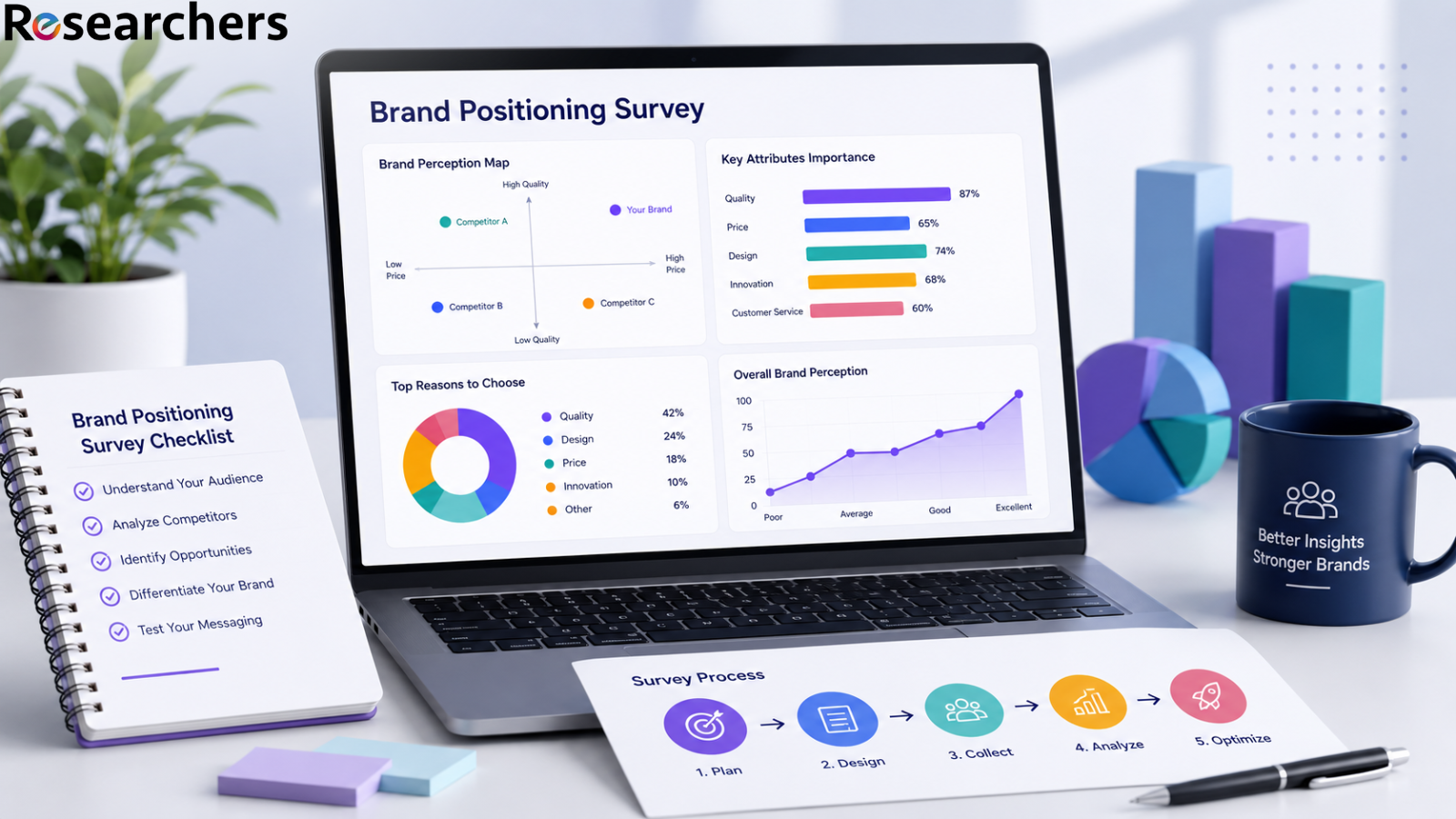
    Given the competitive nature of today’s business environment, it’s critical that you fully grasp the significance of the brand positioning survey.

    This concept is about how your brand fairs compared to competitors in the minds of consumers. However, you need to conduct brand positioning research to build a solid brand identity.

    This blog post overviews brand positioning, the purpose of conducting a brand positioning survey, its key components, and best practices for a successful survey.

    Understanding Brand Positioning

    Brand positioning refers to the distinct space your brand occupies in the minds of consumers compared to your competitors. It’s about how you want consumers to perceive your brand.

    This perception significantly influences consumer behaviors and purchasing decisions.

    A strong brand positioning ensures that your brand is the first to come to mind when consumers think about your industry, product, or service.

    This positive association fosters brand loyalty and sets you apart from competitors.

    Brand Positioning Case Study: Apple

    Apple is an excellent example of a brand that has mastered the 3 C’s of brand positioning (Customer, Company, and Competitors).

    The company understands its target audience (young, tech-savvy consumers), its strengths (innovation, design, and simplicity), and its competitors (Samsung, Google, and Microsoft).

    As a result, Apple has positioned itself as a premium brand in the tech industry.

    The Role of a Brand Positioning Survey

    A brand positioning survey is a strategic tool for gathering essential data and insights about your brand and target audience.

    It helps you identify your unique value proposition, which sets you apart and makes you unique in the eyes of your customers.

    Understanding your target audience’s preferences, needs, and expectations is vital to catering to their desires effectively.

    Armed with this knowledge, you can craft a brand identity survey that aligns perfectly with what your customers are looking for.

    Key Components of a Brand Positioning Survey

    To create an effective Brand Positioning Survey, you need to consider the following key components:

    Demographic and Psychographic Questions

    Understanding your target audience’s demographics (age, gender, location, etc.) and psychographics (interests, values, lifestyle) is vital for tailoring your brand positioning strategies to resonate with them.

    Perception-based Questions

    These questions assess how consumers perceive your brand and how it compares to your competitors. These insights help you identify areas for improvement and potential competitive advantages.

    Competitive Analysis Questions

    Evaluating the market positioning of your competitors allows you to spot gaps in the market and opportunities to differentiate your brand further.

    Differentiation Questions

     This survey aims to identify your unique selling points (USPs): the features that make your brand different and better. Understanding these factors helps you emphasize your strengths effectively.

    Message Testing Questions

    Testing the effectiveness of your brand messaging ensures that your communication resonates with your target audience.

    Conducting a Brand Positioning Survey

    To conduct a successful brand positioning survey, follow these steps:

    1. Determine Survey Objectives and Target Audience

    Clearly define your survey’s goals and identify the audience segment from which you want to gather insights.

    2. Design the Questionnaire

    Craft clear and concise questions that align with your survey objectives. Avoid leading or biased questions that might influence responses.

    3. Select the Survey Method

    Choose the most appropriate method for data collection, such as online surveys for a broader reach or in-person interviews for more in-depth insights.

    4. Implement the Survey

    Launch the survey and collect responses from your target audience. Encourage participation and assure confidentiality to gain honest and valuable feedback.

    5. Analyze the Data

    Thoroughly analyze the survey data to extract meaningful insights and identify patterns and trends.

    6. Refine Brand Positioning Strategies

    Use the survey findings to refine your Brand Positioning Strategies, messaging, and marketing efforts to meet your customers’ expectations better.

    Final Thought

    A brand positioning survey is a valuable tool for businesses of all sizes. It can help you understand how your brand is perceived by your target audience, identify your unique value proposition, and refine your brand positioning strategies.

    If you are interested in gaining an edge in the market and setting the stage for your brand’s sustainable growth, investing in a brand positioning survey is a must.

    By following the steps outlined in this blog post, you can conduct a successful survey that will give you the insights you need to take your brand to the next level.

  • Elevating Brand Awareness: Unleashing the Power of Actionable Survey Insights

    Elevating Brand Awareness: Unleashing the Power of Actionable Survey Insights

    This phenomenon entails making your brand recognizable and memorable to consumers. One effective way to achieve this is via the implementation of actionable survey insights.

    By collecting practicable insights from your target audience, you can make well-informed decisions, refine business strategies, and ultimately achieve your business goals.

    This post will give an overview of brand awareness and its benefits. Then, it uncovers how conducting surveys can provide invaluable insights to elevate your brand.

    Understanding Brand Awareness

    Brand awareness refers to how well your target audience knows and recognizes your brand. It’s about creating a strong presence in the minds of consumers, leaving an unforgettable imprint in their minds.

    With a renowned brand identity, achieving customer trust and loyalty becomes easier, resulting in increased business growth.

    As a result, increasing brand awareness allows you to distinguish yourself from competitors and gain a competitive advantage in the market.

    Conducting Surveys for Brand Awareness

    Surveys are an effective tool for learning about your customers’ desires, views, and behaviors. They allow you to communicate directly with your audience, enabling you to tap into their opinions and thoughts.

    You must outline your objectives and target audience when conducting a brand identity survey in UAE and other marketplaces. This ensures that the information gathered corresponds to the insights you seek.

    Different types of survey questions can be used to gather actionable insights.

    Multiple-choice questions

    Multiple-choice questions provide structured options for respondents, making analyzing and quantifying responses easier.

    Likert scale questions

    Likert scale questions measure attitudes and opinions, allowing you to understand consumer sentiment in a nuanced way.

    Open-ended questions

    Open-ended questions allow respondents to express their thoughts in their own words, capturing valuable qualitative data.

    Analyzing Survey Data

    After gathering survey data, the next step is to analyze it effectively. Analyzing survey data allows you to discover trends, patterns, and correlations to help you make decisions.

    To help with this process, you can use various methods and tools, such as statistical analysis software.

    You’d better understand your target audience’s preferences and perceptions by interpreting the survey results, which ultimately leads to actionable insights.

    Utilizing Survey Insights to Elevate Brand Awareness

    Survey insights hold the potential to drive meaningful improvements in your brand awareness.

    By identifying critical insights from the brand awareness survey report, you can tailor your brand messaging and positioning to resonate more effectively with your target audience.

    Moreover, understanding consumer preferences enables you to enhance your marketing campaigns, optimizing your messaging, visuals, and channels to maximize brand exposure.

    Additionally, survey insights can reveal opportunities for brand partnerships or collaborations, leveraging the influence of other established brands to expand your reach and relevance.

    Measuring the Impact of Actionable Survey Insights

    Suppose you want to know how effective your Brand Awareness Strategy is. In that case, you need to know how much of an impact actionable survey insights have had.

    Evaluating the success of your brand awareness marketing strategy is possible when you define vital metrics and set up tracking mechanisms.

    Brand awareness, social media activity, website visits, and customer reviews are all examples of measurable outcomes that demonstrate success.

    For instance, leading brands like Airbnb, Nike, and Coca-Cola have benefited from collecting actionable insights to fine-tune their marketing strategies and establish genuine connections with customers.

    This, in turn, boosts their brand awareness, fosters quality engagement, and achieves a competitive advantage.

    To Sum Up

    Raising brand recognition is crucial to making a name for yourself in the marketplace.

    You can improve your marketing campaigns, reach your target audience, and learn more about your brand by conducting surveys and acting on the insights you gain.

    Finally, strategic alliances and joint ventures can significantly expand your brand’s visibility and influence. Assessing the results of these initiatives is essential for maintaining progress.

  • Unmasking the Real Performance of Products Through Testing

    Unmasking the Real Performance of Products Through Testing

    Image credit: Unsplash

    In today’s business landscape, a company’s success and reputation rely on its potential to provide customers with superior products consistently.

    Thorough product testing services are among the best ways to guarantee high quality. This ensures a product’s performance, functionality, and reliability undergoes critical testing in a controlled environment before it reaches the hands of consumers.

    This blog post will discuss an overview of product testing, the various business testing strategies, and the steps that make up the product testing procedure.

    Understanding the Role of Product Testing in Business Success

    Product testing involves thoroughly evaluating a product’s quality and performance through rigorous procedures.

    It entails passing the product through various scenarios and conditions to identify any flaws, defects, or areas for improvement. By conducting thorough product testing, businesses can:

    Ensure Quality

    Product testing services help companies meet customer expectations and industry standards. It reduces customer dissatisfaction, returns, and negative reviews by identifying and fixing issues before product release.

    Improve Customer Satisfaction

    Customer product testing before launch ensures optimal product performance and improves user experience. Businesses can boost customer satisfaction, trust, and loyalty by offering reliable, user-friendly products.

    Build Brand Reputation

    Delivering high-quality products builds brand trust. Positive reviews, word-of-mouth, and customer loyalty build brand reputation and market advantage.

    Reduce Costs

    Fixing problems during testing is cheaper than after the product’s release. Early defect detection reduces costly recalls, replacements, and support.

    Types of Product Testing

    Image Credit: Unsplash

    Product testing encompasses various types, each targeting specific aspects of a product’s performance. Some common types of product testing include:

    Functional Testing

    This testing verifies the product’s functionality. It ensures that all features, buttons, inputs, and outputs work as expected.

    Performance Testing

    Performance testing evaluates a product’s load-handling and stress resistance. It optimizes peak performance by measuring response time, scalability, and resource usage.

    Security Testing

    Protecting sensitive data and preventing vulnerabilities requires security testing in a connected world. These product testing methods find security flaws in the product’s architecture or implementation.

    Usability Testing

    This tests the product’s usability and intuitiveness. It assesses navigation, instructions, and user experience to make the product user-friendly.

    Stages of Product Testing

    Product testing in UAE and other countries consists of several phases that ensure a systematic and comprehensive product quality evaluation. These include:

    Requirements Analysis

    This initial stage involves understanding and documenting the product’s requirements and objectives.

    It sets the foundation for the entire product testing process and ensures alignment between the testing efforts and the project goals.

    Test Planning

    Once the requirements are established, the test planning stage begins. This stage involves creating a comprehensive test plan that outlines the objectives, scope, environment, schedule, and resources required for testing.

    Test Design

    In the test design phase, the team creates detailed test cases and scenarios based on the identified requirements.

    Test cases outline specific steps to be executed and expected results, while scenarios cover different aspects and functionalities of the product.

    Test Execution

    The test execution stage involves executing the test cases and scenarios defined in the previous step.

    Testers meticulously follow the steps outlined in the test cases, record the actual results, and compare them against the expected results.

    This stage aims to identify any deviations or issues that may arise during product usage.

    Final Thought

    Image Credit: Unsplash

    For today’s successful companies, Investing in Product Testing is no longer a luxury but a necessity.

    Focusing on product quality and using product testing can help businesses stand out from the competition, increase customer satisfaction, and cement their positions as leaders in their fields.

    Remember that testing a product is not a one-and-done deal but something that must be done repeatedly throughout its lifetime.

    Also, since this process requires expertise, businesses must ensure they hire a reputable consumer product testing company for optimal results.